

The first $100 from a digital product is a milestone for a reason: it proves strangers will pay you for something that costs nothing to duplicate. After that, scaling is mostly repetition. The hard part is the sequence; most bloggers build first and validate never.
Why digital products beat everything else at your size
Ads need tens of thousands of pageviews. Affiliate income needs buyer-intent traffic. A $19 template needs six sales a month. That’s the whole appeal: digital products monetize trust, and even a small blog has more trust than traffic. The margins, meanwhile, are as good as commerce gets; build once, sell forever, no inventory, no shipping, no refunds cycle beyond the occasional email.
Start with what your blog already proves
The fastest product ideas come from your own analytics, not from brainstorming. Look for:
- Your most-visited post. What does someone do after reading it? A checklist, spreadsheet, or template that turns the post into action is the natural product. A post about blog launch steps sells a launch checklist better than any ebook concept.
- The questions readers email you. Five people asking the same thing is a product outline.
- The thing you made for yourself anyway. The keyword tracker you built in Google Sheets, the content calendar that keeps you consistent; you are one person; your readers are thousands of the same person.
Validate before you build (this is the step everyone skips)
The expensive mistake is three months of building followed by silence. Cheap validation comes first:
- Describe it, don’t build it. Put a one-paragraph description and a “coming soon; founding members get 40% off” form at the end of your most-visited post. Founding-member pricing turns your best readers into your first customers before the product exists.
- Count pre-orders, not compliments. “That sounds cool!” is worth nothing. Ten people paying $12 for something that doesn’t exist yet is a green light; and their money funds the finishing.
- If nobody pre-orders, change the offer once (different angle, different price point) and if it’s still silence, you just saved a month of building the wrong thing.
What to build first (by effort to value)
- Templates, checklists, spreadsheets ($9-$29): buildable in a weekend in tools you already know. The best first product by far; fast to make, instantly understandable, no support burden.
- Mini-guides and email courses ($29-$79): a focused 30-50 page guide beats a sprawling ebook. One problem, solved completely.
- Full courses ($99+): the endgame, not the start. Courses need proof (student results, testimonials) and proof needs a smaller product behind it. Don’t start here.
The launch that respects your readers
Launching is a sequence, not a day. Week 1: mention the problem in a post, casually. Week 2: publish the free version of a piece of it (a mini-checklist) to your list (generosity first. Week 3: open the cart with founding pricing and a real deadline. Week 4: close it, deliver, ask the first buyers for one sentence you can quote. Then reopen to everyone at full price. The deadline isn’t a trick) it’s how you avoid a permanent “coming soon” page that converts nobody.
Taking payment without a headache
You don’t need a custom store on day one. Gumroad, Lemon Squeezy, or Payhip handle checkout, delivery, taxes, and receipts for a percentage; perfect at this size. WordPress-native options (Easy Digital Downloads, SureCart) make sense once volume justifies the setup time. Whatever you pick, deliver the file instantly and personally email your first ten buyers. That email is where testimonials come from, and testimonials are what the next launch runs on.
The honest math of the first $100
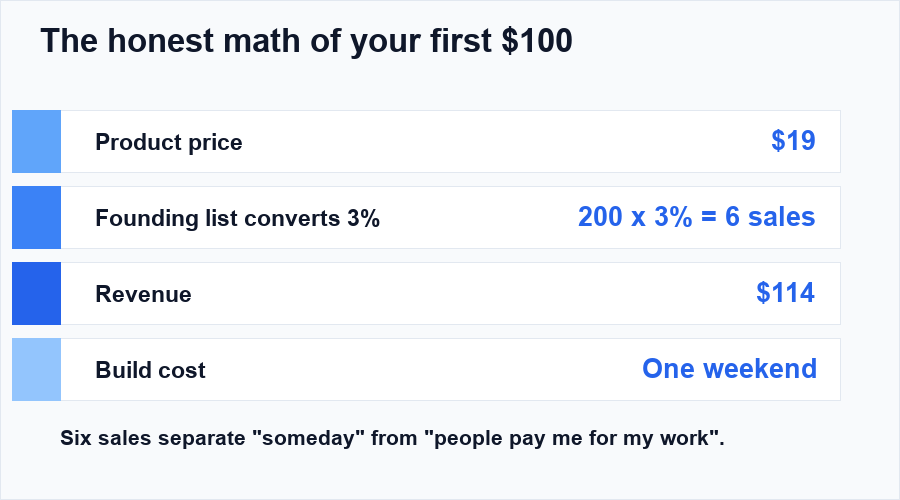
A $19 checklist needs six sales. A list of 200 subscribers converting at 3% buys four copies on launch week; which means the real work is the list, and the list grows from your blog. If you’re starting from zero there, fix that first: our blog setup guide covers the foundations, and pairing products with affiliate recommendations (see AdSense vs affiliate) turns each reader into two opportunities instead of one.
Six sales. That’s the whole distance between “I should sell something someday” and “I’m a person whose work people pay for.” Start the pre-order page today.
Be generous with refunds
Counter-intuitive but true: a “no questions asked, 30 days” refund policy makes you more money, not less. Refund requests on a $19 product are rare; the trust the policy signals converts fence-sitters who’d otherwise leave. When a refund does come through, pay it fast and thank them for trying; some of the best testimonials and product improvements start as refund emails.
Frequently Asked Questions
My blog is tiny. Too early?
Tiny is fine; small blogs convert better per reader because the trust per reader is higher. What matters isn’t traffic, it’s whether at least a few hundred people read you and some of them would follow you to a checkout page. A 500-subscriber list can fund your first product launch; 50,000 anonymous pageviews often can’t.
Do I need a big email list?
A small, warm list outsells a big cold one every time. If you have no list at all, the founding-member pre-order described above is the list-building mechanism; everyone who pre-orders is now a subscriber who has paid you once, which is the strongest subscriber there is.
Gumroad or WordPress-native?
Start on Gumroad, Lemon Squeezy, or Payhip; zero setup, they handle tax paperwork, and percentage fees on small volume cost less than your time. Migrate to Easy Digital Downloads or SureCart when monthly volume makes the math obvious. Premature store-building is the digital-product version of polishing the logo before writing posts.
Keep going: products stack on top of the other two streams. The comparisons are in AdSense vs affiliate marketing; and if the blog itself is still an idea, start at the beginner setup guide.